Wednesday, April 8, 2009

Week 5

Week 5

1. Provide an IT example that relates to the ethical issues for the ideas of privacy, accuracy, property, and accessibility.
Privacy – issues involving collecting, storing, and disseminating information about individuals.
Accuracy – issues involving the authenticity, fidelity, and accuracy of information that is collected and processed.
Property – issues involving the ownership and value of information.
Accessibility – issues involving around who should have access to information and whether they should have to pay for this access

2. What are the 5 general types of IT threats? Provide an example for each one
Human error
Natural disaster
Malicious behaviour
Malicious code: virus, spam, phishing
Management security negligence – through incorrect procedure and recovery established within workplace

3. Describe/discuss three types of software attack and a problem that may result from them
A denial of service: when front end of company’s internet is flooded with ping of death, and site can be flooded until ransom is payed
Virus: malicious code not done anymore to cause harm but to steal information
Spam: junk mail which users high numbers to gain profits
Phishing: using fake identification through emails to gain information of other.


http://www.hyperlearn.com/images/ComputerChainedDown.jpg

4. Describe the four major types of security controls in relation to protecting information systems.

Authentication: system knowing exactly who the user is, done by entering passwords, security bar-coded card or biometric scanning of fingerprints, eye detection etc.
Physical security: entering server rooms are highly secure and limited to access. Other procedures such as locking computers when leaving terminals. Administration limitation on access is also a manipulated control.
Authorisation: determines which actions, rights, or privileges the person has, based on the verified identity.

5. What is information system auditing?
Process of evaluating the suitability and validity of an organization's information systems, practices and operations to ensure people who view or access the files should be viewing the files (that is authorised)

6. What is the difference between authentication and authorization and why are they important to e-Commerce/give an example of their relevance to e-Commerce
Authentication and authorization are important to e-Commerce because once users have been properly authenticated then their rights and privileges that they have on the organisation systems are established. For example, this allows a companies system to be better secured whilst granting access to employees for activities where there is justifiable need to grant authorization.

Week 4

Week 4

1.What are main differences/distinction between system software and application software?
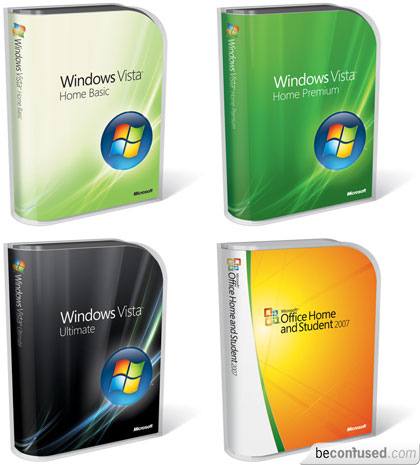
System software such as Windows Vista and other operating systems which control the computer and all operations with the hardware.
Application software specific software that does specific functions such as Microsoft office which are compatible with the system software and work on the operating system.

The bottom right corner is system software amongst the variations of Microsofts operating system.
http://www.topnews.in/files/Microsoft-Windows-Vista-Price-Reduction.jpg

2. What are the two main types of system software?
· System Control software: which controls hardware such as drivers
· Support/Utility software such as file manager, performance manager which provides a piece of system support for operating system.

3. What is the difference between proprietary and open source software? What considerations should be made when a business selects either software.
Proprietory software is software licensed which you cant change the source of the software. But offers support through the proprietor. For example Internet explorer.
Open source software has no license allowing you to distribute it, open and edit source code by programmers such as firefox and open office (regarded as freeware). No support offered relies on user accessing forums for assistance. For example Mozilla Firefox.
http://www.product-reviews.net/wp-content/userimages/2007/12/internet-explorer-or-firefox-what-browser-is-more-secure.jpg

4. What are some of the legal issues involved in acquiring and using software in most businesses/organizations?
If businesses are using proprietary software, license must be purchased otherwise used illegally. The software is not permitted to be distributed. Whereas open source software is freeware and permitted to be used for free and distributed how ever liked.

5. What is meant by SaaS? Name some examples of this software.
Saas (software as a service) is software whereby a proprietor licenses an application to customers for use as a service. Saas is software which runs up in the cloud. Examples include:
· Sales force-online CRM
· Microsoft live
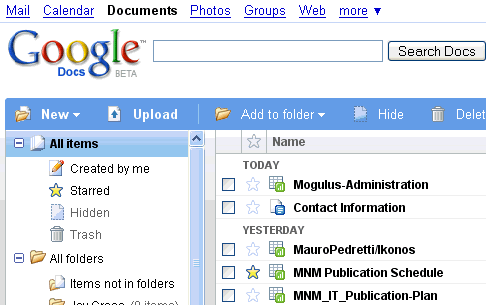
· Google Docs
www.masternewmedia.org/images/Google-Docs-interface-at-a-glance.gif

Week 3

Week 3

1. What is computer hardware and what are the major hardware components?
Computer hardware refers to the physical equipment used for the input, processing, output, and storage activities within a computer system.
The six major hardware components of computer systems: the central processing unit, primary storage, secondary storage, input technologies and output technologies.
http://www.3dmultimedia.com/help/windows/jpgs/elements.jpg

2. What is Moore's Law/what does it mean in relation to computers.
Founder of Intel, he predicted that speed of computers will double every 24 months and that processor chips would continuously get smaller.

3. In basic terms, describe how a microprocessor functions.
The control unit accesses programs instructions, decodes them, and controls the flow of data to and from the arithmetic logic unit ALU, registers, caches, primary and secondary storage and various output devices.
The ALU performs the mathematic calculations and makes logical comparisons.
The registers are high speed storage areas that store very small amounts of data instructions for short periods of time.


www.schoolnet.gov.mt/.../image011.jpg
4. What factors determine the speed of the microprocessor?
Clock speed
Word length
Bus width
Physical design of chip

5. What are the four main types of primary storage.
Random Access Memory (RAM) - holds software programs as they run and small amounts of data for processing.
www.ralphlosey.files.wordpress.com/2007/06/ram.jpg

Cache Memory- high speed memory that enables the computer to temporarily store blocks of data that are used more often and that a processor can access more rapidly than main memorywww.img.zdnet.com/techDirectory/CACHEMEM.GIF
Read Only Memory
- a type of chip where certain critical instructions are safeguarded.
www.hama.co.uk/.../body/memorycards/cf_card2.jpg

Registers - smallest memoryt: store instructions only immediately before and after processing


6. What are the main types of secondary storage?
Magnetic media – Hard drives
Optical media – CD ROM and DVD ROM
Solid state media – Flash/USB Drives
7. How does primary storage differ from secondary storage in terms of speed cost and capacity?
Primary is faster but more costly and smaller than secondary storage

8. What are enterprise storage systems?
An enterprise storage system is an external system with intelligence that includes two or more storage devices. There are three major types of enterprise storage subsystems: redundant arrays of independent disks (RAIDs), storage area networks (SANs), and network-attached storage (NAS).
Provide large amounts of storage, high performance data transfer, a high degree of availability, protection against data loss and sophisticated management tools.

9. Distinguish between human data input devices and source data automation.
Human data input devices: rely on humans to input data, and prone to human error. Such as: keyboards, mouse
Source data automation: far more accurate and faster. Such as barcode scanners

10. What is one new technology that will change how we do things? You need to do some research

The Livescribe Pulse Digital Smartpen records notes in 2 ways:
Creates digital copies of everything you write by hand while recording audio at the same time.
Links the two together, so you can quickly access audio by poking parts of the notes.
The data is Uploaded to the computer where the Livescribe software archives and makes your notes fully searchable.
It offers features like a calculator, translator, and a paper piano that plays a mini piano which you draw on the paper.
www.gizmodo.com/386809/review-livescribe-pulse-digital-penrecorder-verdict-its-good-for-notetakers

An interesting video/advertisment on the Smartpen and its numerous features can be seen on this url: www.youtube.com/watch?v=Ag6R8v9YZ2k


Week 2

Week 2


1. What is the difference between an 'application' and a computer-based information systems?
Applications are one or more pieces of computer-based information software morphed together.

Computer based information system is a broader term relating to software hardware which performs intended tasks

2. What are strategic information systems?
Any system that helps an organisation gain a competitive advantage or diminishes a competitive disadvantage. Strategic information systems attempt to provide this advantage by guiding the organisation to implementing its strategic goals and therefore increase its performance and productivity.

3. According to Porter, what are the five forces that could endanger a firm’s position in its industry or marketplaces?
Michael porters competitive forces model includes:
Threat of new competitors
Bargaining power of customers and suppliers
Threat of substituted services and products
Rivalry of existing firms in industry

Shown in diagram below

4. In relation to Porter's value chain model, what is meant by primary activities and support activities, and how does IT support these activities?

According to Porter’s value chain model, the activities conducted in any organisation can be divided into two categories primary and support activities.

Primary activities
are those business activities that relate to the production and distribution of the firms products and services, thus creating value for which customers are willing to pay. Primary activities involve purchasing materials, processing materials into products, and delivering products to customers.

Unlike primary activities, support activities contribute to the firm’s competitive advantage by supporting the primary activities.
Support activities consist of: The firm’s infrastructure, Human resources management and research and development

5. Discuss the logic of building information systems in accordance with the organizational hierarchical structure.
Once the company forms its hierarchical structure it then forms systems for each of these structures. They are then interconnected. Specialisation and customisation then takes place in each division, the business focuses on what types of software and hardware are necessary for each division for each of there specialised tasks. For example; graphic editing software and hardware for marketing division of a business

6. How has the Internet affected each of the five forces in Porter’s competitive forces model.
The larger market has meant:
Threat of new competitors much higher because worldwide businesses are included through e-business.
Bargaining power of suppliers has diminished due to the variety of suppliers available
Bargaining power of customers has now increased due to more competitors in global market
Substitute products is really high due to ease to replicate products

Tuesday, April 7, 2009

Week 1

Week 1

1. What are the characteristics of the modern business environment?
Very dynamic environment and subject to change.
Competition and globalization are strong.
Need for telecommunications to attempt to access the electronic market


2. What is meant by a web-based, global platform, what does it provide, and how has it affected business?
The global, web-based platform is best represented by the Internet and the functionality of the World Wide Web.
The platform provides individuals with the opportunity to connect, communicate, and compete anytime; to access limitless amounts of information, services, and entertainment; to exchange knowledge; and to produce and sell goods and services.
This has affected business by increasing the competitiveness of businesses and enabling rapid advances in information technology along with an increase of global business or e-business.


3. What are the main pressures that characterize the modern global business environment?
Examples of three main pressures that characterise global business environment are:
Market pressures: global economy and strong competition, the changing nature of the workforce, and powerful customers.

Technology pressures: technological innovation and obsolescence, and information overload

Societal/political/legal pressures: social responsibility, compliance with government regulations and deregulation, protection against terrorist attacks, ethical issues


4. What are/discuss some of the common, IT oriented organizational responses to these pressures?
Strategic systems are being built to know who their customers and competitors are.

Customer focus through adapting new practices which aim to satisfy the customer – online vehicle registration etc.


5. How are IT architecture and IT infrastructure interrelated.
The people are the input and processes which interrelate with the architecture and infrastructure


6. Is the Internet an infrastructure, an architecture, or an application program? or something else. Why?
The Internet is part of the infrastructure because it is a communication technology that offers a platform for all of an organisations information systems.