Thursday, May 28, 2009

Week 10

Chapter 8


Section 8.1

1. What is a Transactional Processing and the role of TP systems. State the key objective of TP/TPSs.
TPSs monitor, collect, store as well as process datafrom all business transactions.


The objective of TPSs is to handle high volume and large variations in volume efficiently, avoid errors and downtime, record results accurately and securely, as well as maintain privacy and security.

Section 8.2


1. What is a functional area information system? List its major characteristics.

Functional area information systems (FAIS) use information from mid-level management to help them plan, organise and control operations.
They are crucial system as it supports a particular area of the business. They were traditionally built independent of each other and were designed to increase individual effectiveness and efficiency.

2. How does an FAIS support management by exception? How does it support on-demand reports?
FAIS support management by exception due to the use of exception reports. Exception reports include only information that falls outside certain threshold standards.


Ad hoc(on demand reports): they include requests for the following types of information: Drill down reports, key indicator reports, comparative reports.

Section 8.3

1. Define ERP and describe its functionalities.
The multi million dollar system that combine all the systems in a company(
planning, management, and use of all an organisations resources)

It can control all information flows across organisation to suit strategic goals by tightly integrating the functional areas of the organisation and enabling information to flow seamlessly across the functional areas.

2. List some drawbacks of ERP software.
  • Very complex
  • Expensive
  • Time consuming to implement
  • Change firms traditional work practices
Section 8.5


1. Define a supply chain and supply chain management (SCM).
A Supply Chain refers to the flow of materials, information, money and services through the production process(from raw material suppliers, through to factories and warehouses and then to the end customer).


Supply Chain Managements (SCM) function is to plan, organise, and optimise the general supply chain activities.


2. List the major components of supply chains.
Upstream: procurement from external suppliers occurs (orders, information, payments, returns)

Internal: packaging, assembling, or manufacturing occurs

Downstream: distribution occurs (products, services, information)

Chris Makers Powerpoint Notes

3. What is the bullwhip effect?

The bullwhip effect refers to erratic shifts in
the supply chain


Chris Makers Powerpoints Notes

Section 8.6

1. Define EDI and list its major benefits and limitations
Electronic Data Interchange (EDI) enables different businesses to exchange business documents with mutual data formats.

Major benefits

  • Minimises data error
  • Messages secure
  • Increase productivity by reducing cycle time
  • Minimises paper usage
  • Customer service enhanced cause things done quicker

Limitations

  • Great investment to keep it going and to establish
  • Difficult to build around flexible system
  • Training required
  • Requires long establishment period

Week 9

Chapter 7

1. Identify common wireless devices and their application to business
Notebooks, PDAs, Smart phones are heavily required within current business. For example Sales-men use these devices to communicate with their clients, display their goods or services or for general operations. Businesses also use these devices to permit 24/7 communication between the employees on a global basis.

http://ecx.images-amazon.com/images/I/31JMfgh-FgL.jpg

2. Describe the various types and general characteristics of wireless transmission media/technologies - microwave, satellite, infrared and radio waves.
Microwave Transmission systems are used for high volume, long distance, line-of-sight communications (transmitter and receiver must be in view of each other). However they are susceptible to environmental interference such as severe weather such as heavy rain/ snow storms. This form has come to be replaced by satellite communication systems.

Satellite Transmission Systems
Geostationary (GEO), Farthest from the earth
Medium Earth Orbit (MEO)
Low Earth Orbit (LEO). Closest from the earth

Similar to microwave transmissions, satellites must receive and transmit data via a line of sight. It overcomes the limitations of microwave data relay stations because the height the satellite orbits. So, even though satellites are line-of-sight like microwave, they are high enough for broadcast transmission, thus overcoming the limitations and restrictions of microwave.

Radio Transmission uses radio-wave frequencies to send data directly between transmitters and receivers. Radio transmission has several advantages:
  • can send the radio waves through normal office walls,

  • its inexpensive and easy to install,

  • can transmit data at high speeds
Infrared Transmission uses an infrared light/red light to transmit the data. Such as remote controls for Televisions. Used for short-distance connections between computers and peripheral equipment.

http://www.centennialofflight.gov/essay/Dictionary/ELECTROSPECTRUM/DI159G1.jpg


3. What is bluetooth/how is it used?
Bluetooth is an industry specification used to create small personal networks (similar to that of wlan but smaller range). Bluetooth enables short-range connection (data and voice) between wireless devices E.g. mobile phones.

http://www.home-network-help.com/images/wireless-ap-network.jpg

4. What are WLAN's, Wi-Fi, WWAN's, 3G?
Wireless Local Area Network (WLAN): a wireless local computer network in a limited geographical area that used wireless transmission for communication.

http://www.home-network-help.com/images/wireless-ap-network.jpg


Wireless Fidelity (WI-Fi) is a medium range WLAN, which is basicallythe same as WLAN with a larger range.

Wireless Wide Area Networks (WWANs) can bridge branch offices of a company and cover a much more extensive area that wireless LANs or Wi-fi.

3G network: the 'third generation' of developments in wireless technology, especially mobile communications. 3G technologies enables network operators to offer mobile users a wider range of more advanced services such as high speed internet while achieving greater network capacity.

5. What are the drivers of mobile computing and mobile commerce
There’s a widespread availability of mobile devices, no need for pc's anymore due to PDAs, net books and notebooks. Bandwidth improvement has meant quicker processing and therefore more effective and efficient mobile commerce and computing.

6. Explain the nature of RFID
Radio Frequency Identification Technology(RFID) is a wireless technology developed to replace barcodes by permitting manufacturers to attach RFID tags with antennas and computer chips and then track their movement through radio signals. Some tags can be read from several meters away and beyond the line of sight of the reader. Tags remain expensive so they are not used in low-prices items. Examples include E-tag or speedpass.

http://www.radio-active.net.au/web/technology/etag3.jpg

Week 8

Chapter 5
1. Describe the underlying technologies, applications and types of Web sites that comprise Web 2.0.


  • Ajax Is a technology that allows web pages to update parts of the page rather than the whole page being forced to refresh.
  • Facebook: Tagging in photos
  • Blogs
  • Wikis
  • Podcasts (info on demand)

http://hinchcliffe.org/img/web1vsweb2.png

2. Describe the function of Web services.

Web Services are a bunch of shared protocols and standards that allow data to travel through different web applications. XNL put data in a format that is compatible amongst all the applications to allow it to share the protocols over the web.

3. Describe how you see Social Networking being used in Business.


Social networking allows users to upload their content to the web, in the form of text (for example, blogs), voice (for example, podcasts), images and videos (for example, youtube).


A great example of a business using social networking is "Kiva": web site which permits people to loan money to small businesses in the developing world, has permitted poor people in those countries to achieve economic independence. Thus Social networking is beneficial for businesses as they permit a greater customer base as well as larger networking allowing effective and efficient operations.


Chapter 6

Section 6.1

1. Define e-commerce and distinguish it from e-business.
Ecommerce is basically the purchasing and selling of services and goods over the internet whereas E-business is the broad term of buying and selling and collaborating goods and services and covers all the supporting activities for ecommerce.

2. Distinguish among B2C, B2B, C2C and B2E electronic commerce.

B2C: Business to Consumer - Organisation selling to individual


B2B: Business to Business - Organisation selling to another organisation

C2C: Consumer to Consumer - Individual selling to another individual


B2E: Business to Employee - Organization providing information and services to its employees. Allowing the employees to manage their benefits, take training classes electronically; buy discounted insurance, travel packages, and event tickets.

3. List some benefits and limitations of e-commerce.

Benefits

  • Consumer has more power as global competitors
  • Lower prices as parts of supply chain are redundant
  • 24/7
  • Social benefit: allowing rural areas access to goods and services


Limitations

  • Whether funds are safe and credit card details are encrypted
  • Insufficient bandwidth
  • Hard to get personalised service
  • Few services for goods such as food
  • Cant try on clothes or examine goods

Section 6.2


1. What are spamming, permission marketing and viral marketing?

Spamming: sending out unwanted emails of advertisements


Permission marketing: asks for permission if you would like emailed marketing


Viral marketing: word of mouth marketing relying on good service


Section 6.4


1. What are micropayments?

  • Sms payments

  • Electronic checks

  • Electronic credit cards

  • Purchasing cards

  • Electronic cash

  • Digital wallets


2. What is Multichanneling?
Process by which manufacturers sell through numerous channels such as dell’s online straight to consumer or going to a retailer.

Section 6.5


1. List some ethical issues in EC.

  • Disintermediation: people in supply chain making profit lose this job
  • Privacy issues: as details are provided over the web
  • Cookies

2. List the major legal issues of EC.


  • Fraud: fake versions of tameflu (drug which cures swine flu)
  • Sales tax
  • Domain name
  • Copyright

Tuesday, May 26, 2009

Week 7

Tech Guide 4

1. Describe the basic telecommunications system?
A Basic Telecommunications System consists of hardware and software which transmit information from one node to another. Text, data, graphics, voice, documents, or full-motion videos can be transmitted through the system either by analog or digital signals.

Analog signals are continuous waves which transmit information by altering their characteristics.
Digital signals are pulses which makes use of the binary system. This is when bits are used to portray zeros and ones, which represents a series of ons and offs.
http://www.privateline.com/manual/fig3_1.gif
2. Compare and contrast the main wired communications channels ? (Ethernet & Fibre Optic)
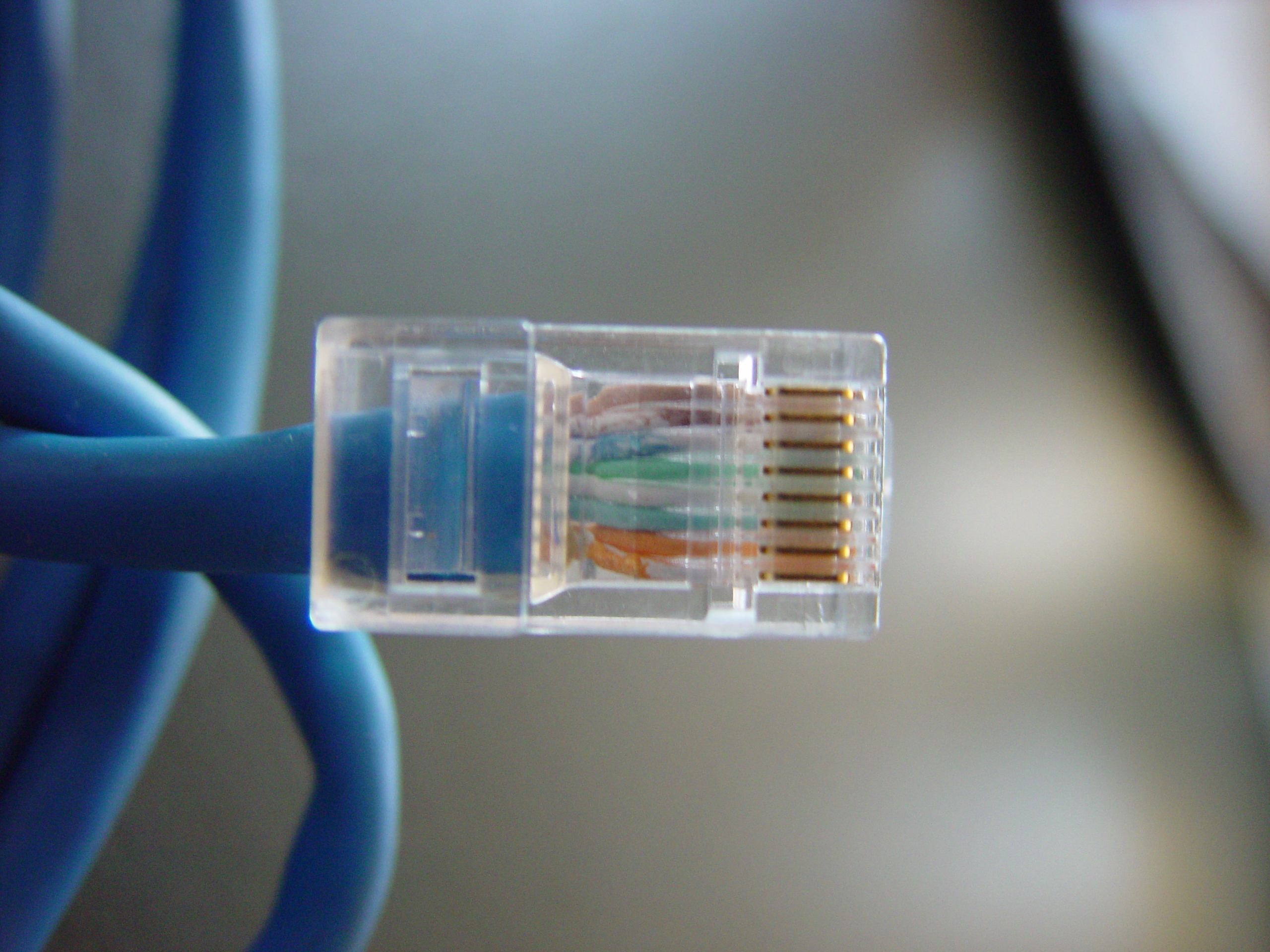
Ethernet is the international standard networking technology for wired implementations. It is a technology for high-speed bandwidth connectivity over local area networks. And is the most common cabling used when establishing networks.
http://www.turbophoto.com/Free-Stock-Images/Images/Ethernet%20Cable.jpg

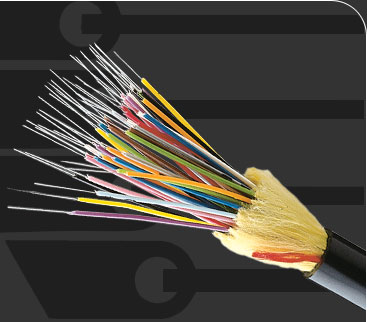
Fibre optic cables are types of cables with fibre optics or plastic core that transmits digital signals in the form of light pulses. The image below displays the number of fibre optic wires within a single cable.
http://schrier.files.wordpress.com/2008/07/fiber-optic-cable.jpg

3. What are the main business reasons for using networks?
  • Improve efficiency

  • Reduced errors

  • Improved consistency

  • Improved communication
    Reduce costs

4. What is the difference between LANs and WANs?

Local area networks (LANs) connect computers over a single location such as within an office while Wide area networks (WANs) connect computers at different geographic locations such as an office network from Sydney to Melbourne.
http://www.webperformanceinc.com/support/suite/manual/how_to_load_test_files/image002.jpg

5. What is a network protocol?
Network Protocols are a set of rules that enable data to move around the internet

Application protocols – DNS, HTTP, HTTPS

Internet Protocols – ICMP (Routing Protocols)

Network Access Protocols – Ethernet, Wi-Fi

Transport Protocols – TCP/IP, UDP


6. Describe TCP/IP protocol.
Transmission Control Protocol/Internet Protocol is the universally used protocol of the Internet. And refers to the suite of transport and application protocols that allow different networks around the world to communicate to each other. Each computer on the internet posseses a unique IP address.

Watch this Video for a quick discussion of Transmission Control Protocol/Internet Protocol

Week 6

Chapter 4 - Databases
1. What are some of the difficulties in managing data?

  1. Firms have huge quantities of data so systems must be kept to hold the data for long periods of times

  2. The data must be organised into different sections for the sectors of the business

  3. To make better decisions the data needs to be external to the organisation; it needs to be secure and high quality.
2. What are the various sources for data?
Internal such as product information
Personal such as employee details etc
External sources out of organisation such as BOS

3. What is a primary key and a secondary key?
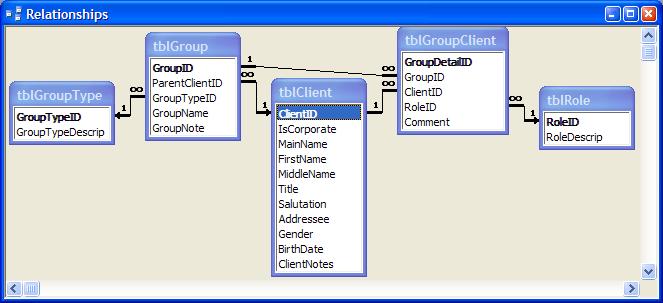
Primary Key: is a key field that uniquely identifies an entity http://www.eraserve.com/tutorials/images/MS_Access_Two_Primary_Keys.jpg
Secondary Key: another key field used to identify a specific record; indexing the data
4. What is an entity and a relationship?
Entity: Person place and the thing – something we maintain information about within a database
Relationship: way entity’s relate to each other through tables using a common field one to one or one to many or many to many.
5. What are the advantages and disadvantages of relational databases?
Provides flexibility allowing complex queries and searches to gather knowledge about the entities.
But if design is too complex it is too slow to access

6. What is knowledge management?
Way to combine all the data sources in an organisation and bring them to a central screen. Many organisations have lots of different databases

7. What is the difference between tacit knowledge and explicit knowledge?
Explicit knowledge: objectionable, rational and technical types of knowledge: knowledge about each entity

Tacit knowledge: Using explicit knowledge to give incites and under the surface type knowledge